
Understanding Electric Vehicle Charging Stations and Power Systems
The Evolution of Electric Vehicle Charging Infrastructure
As electric vehicles gain popularity, the expansion of charging stations becomes vital to meet growing demand. Companies are enhancing infrastructure along major routes, offering diverse charging options from basic to fast chargers. The landscape has shifted from isolated pilot programs to comprehensive networks spanning residential areas, commercial districts, and highway corridors.
The modern charging ecosystem divides into three distinct levels, each serving different needs and timelines. Level 1 charging uses standard 120-volt household outlets, delivering roughly 4-5 miles of range per hour—adequate for overnight home charging but impractical for anything urgent. Level 2 stations operate at 240 volts, the same power drawn by electric dryers and ovens, adding 25-30 miles per hour. DC fast chargers bypass the vehicle's onboard converter entirely, pushing 80% charge in under 30 minutes for compatible models.
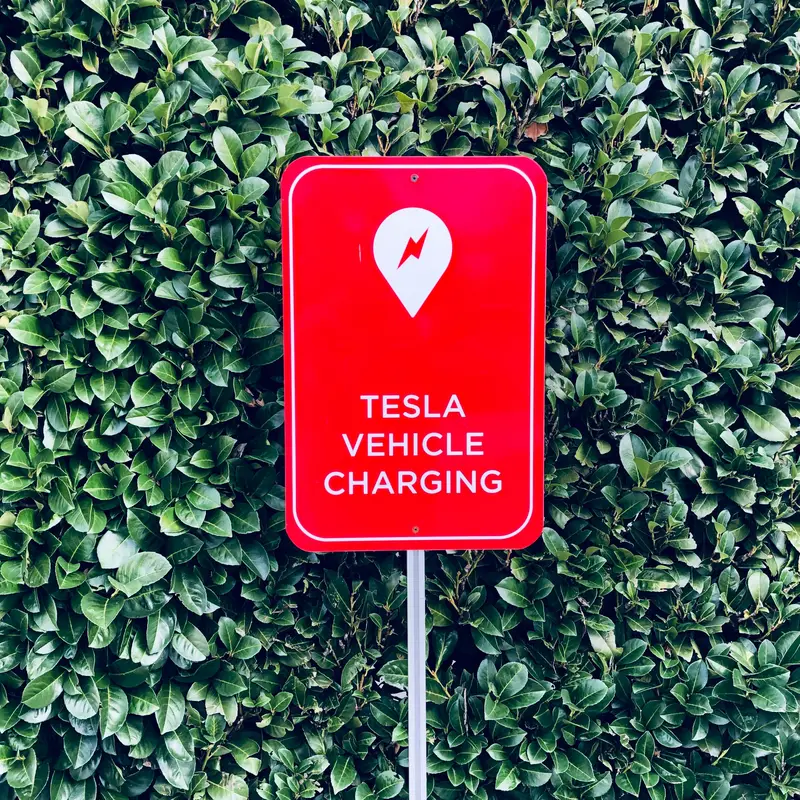
Major providers like Tesla, ChargePoint, and Electrify America have built overlapping networks with varying access terms. Tesla's proprietary connector dominated early adoption, while ChargePoint focused on workplace and retail partnerships. Electrify America emerged from regulatory settlement funds, installing high-power stations along interstates to eliminate range anxiety for long-distance travel.
Home Charging Stations: The Primary Power Source
Most electric vehicle charging happens at home, where drivers park for hours and electricity rates drop overnight. Installing a home charging station requires evaluating your electrical panel capacity, available circuit breakers, and the distance from panel to parking spot. A typical Level 2 home EV charger draws 40-50 amps, comparable to adding a second air conditioning unit.
Ford and Wallbox offer smart chargers with WiFi connectivity, allowing owners to schedule charging during off-peak utility hours and monitor energy consumption through mobile apps. The Tesla Wall Connector delivers up to 44 miles of range per hour for compatible vehicles, while the ChargePoint Home Flex adjusts output from 16 to 50 amps depending on your electrical service.
Public Charging Networks and Accessibility
Public electric charging stations fill the gap for apartment dwellers, long-distance travelers, and opportunistic top-ups during errands. Networks operate on subscription models, pay-per-use rates, or hybrid systems. EVgo specializes in urban fast-charging hubs near grocery stores and shopping centers, targeting the 15-30 minute dwell time of routine errands.
Charging stations near me has become a common search query as drivers plan routes around available infrastructure. Mobile apps from ChargePoint, Electrify America, and third-party aggregators display real-time station availability, connector types, and current wait times. Some networks reserve stations for members or require account setup before initiating a charge session.
Key Features in Modern EV Power Systems
Understanding ev power systems requires looking beyond plug types to the underlying technology managing energy flow. Modern electric vehicle charging systems integrate smart grid communication, load balancing, bidirectional capability, and solar integration—features that were experimental five years ago and standard today.
Smart Charging and Load Management
Smart chargers adjust power delivery based on electricity rates, grid demand signals, and user preferences. During peak afternoon hours when utilities strain to meet air conditioning load, a smart system throttles charging or pauses entirely. When rates drop after midnight, it resumes at full power. This load shifting saves homeowners 30-40% on charging costs annually while reducing stress on local transformers.
JuiceBox (now under Enel X) pioneered app-based scheduling and energy tracking, displaying kilowatt-hours consumed, estimated cost, and CO2 offset compared to gasoline. Newer models from ABB include OCPP protocol support, allowing integration with fleet management systems and commercial building energy management platforms.
Installation Requirements and Electrical Upgrades
Electric charger installation begins with a licensed electrician evaluating your home's electrical panel. Most homes built after 2000 have 200-amp service, sufficient for a 40-amp EV charger without upgrades. Older homes with 100-amp or 60-amp panels often require a service upgrade, adding $1,500-$3,000 to installation costs.
The distance from panel to parking spot affects wire gauge and labor hours. A garage directly behind the panel might cost $800-$1,200 for complete installation, while a detached structure 75 feet away could exceed $2,500 due to trenching, conduit, and heavier wire. Permitting and inspection fees vary by municipality but typically add $200-$400.
Comparing Home Charger Options
| Product | Description |
|---|---|
| Level 2 home EV charger (240V) | Standard residential charging solution delivering 25-30 miles of range per hour through dedicated 240-volt circuit. |
| Tesla Wall Connector | Proprietary home charger for Tesla vehicles offering up to 44 miles per hour with sleek design and WiFi connectivity. |
| ChargePoint Home Flex | Adjustable-output charger (16-50 amps) compatible with all electric vehicles, featuring scheduling and energy tracking via mobile app. |
| Portable Level 1 EVSE cable | Emergency backup charging solution using standard 120-volt outlet, delivering 4-5 miles per hour without installation. |
| DC fast charger (Level 3) | Commercial-grade rapid charging system bypassing onboard converter, adding 80% charge in 20-40 minutes for compatible vehicles. |
| Smart EV charger with WiFi and app control | Connected home charger enabling remote scheduling, energy monitoring, solar integration, and utility demand response participation. |
Installation Services and Professional Requirements
With government backing and technological innovations, understanding the installation process becomes crucial for homeowners transitioning to electric transport. The quality of installation affects safety, warranty coverage, charging speed, and long-term reliability.
Licensed Electrician Requirements
Most manufacturers require installation by licensed electricians to maintain warranty validity. The work involves running 6-gauge or 4-gauge wire from the electrical panel, installing a dedicated 40-50 amp circuit breaker, mounting the charging unit, and obtaining municipal inspection approval. Improper wire sizing creates voltage drop, reducing charging speed and generating heat.
Several services bundle equipment with professional installation. British Gas and Pod Point in the UK offer end-to-end packages including site survey, permitting, installation, and commissioning. In North America, electricians certified by charger manufacturers receive technical support and access to troubleshooting resources unavailable to general contractors.
Panel Capacity Evaluation
Electrical panel capacity evaluation determines whether your existing service handles the additional load. Electricians calculate current demand by summing major appliances—HVAC, water heater, range, dryer—and comparing against panel rating. If total load exceeds 80% of capacity, utilities and electrical codes require a service upgrade before adding an EV charger.
Some utilities offer managed charging programs that install a separate meter and circuit for EV charging, bypassing the home's main panel. This approach qualifies for special time-of-use rates as low as $0.06 per kilowatt-hour overnight, compared to standard residential rates of $0.12-$0.18.
Workplace and Fleet Charging Programs
Workplace EV charging station program setup involves different considerations than residential installation. Employers evaluate parking lot capacity, electrical infrastructure, access control, billing or free use policy, and ADA compliance. Fleet charging infrastructure planning requires load management systems preventing simultaneous charging from overloading transformers.
Companies installing workplace charging often combine employee benefit with sustainability reporting and local incentive programs. Some utilities offer rebates covering 50-80% of equipment and installation costs for commercial charging stations, recognizing that workplace charging reduces afternoon grid peaks by shifting EV load to business hours when solar generation peaks.
Costs, Incentives, and Financial Considerations
The total installed cost of a home charging station ranges from $1,200 to $3,500 depending on equipment choice, electrical upgrades, and installation complexity. Federal tax credits, state rebates, and utility incentive programs can reduce out-of-pocket costs by $500-$1,500.
Equipment and Installation Breakdown
A mid-range Level 2 charger costs $400-$700, professional installation adds $600-$1,500, and electrical panel upgrades (when required) add another $1,500-$3,000. Portable Level 1 cables cost $200-$300 but require no installation, making them practical for renters or second vehicles with low daily mileage.
The cost to charge an electric car at home depends on local electricity rates and vehicle efficiency. At $0.13 per kilowatt-hour and 3.5 miles per kWh efficiency, driving 12,000 miles annually costs roughly $445—compared to $1,800 for a 30-mpg gasoline vehicle at $4.50 per gallon. Public fast charging typically costs $0.30-$0.60 per kWh, erasing much of the savings when used regularly.
Federal and State Incentives
Federal tax credits cover 30% of equipment and installation costs up to $1,000 for residential charging stations installed through 2032. Many states offer additional rebates: California provides up to $800, New York offers $500, and Colorado rebates $1,200 for income-qualified households. Utility companies add their own incentives, with some programs covering 75% of total costs.
Eligibility requirements vary—some programs require purchasing the charger from approved vendors, others mandate specific installation timelines or require enrollment in time-of-use electricity rates. Stacking federal, state, and utility incentives can reduce a $2,000 installed system to $600 out-of-pocket.
Membership and Network Costs
Public charging network membership through Electrify America, EVgo, or similar providers typically costs $4-$10 monthly, reducing per-session fees by 15-30%. Pay-as-you-go rates range from $0.32 per kWh for Level 2 charging to $0.48 per kWh for DC fast charging, with some networks adding time-based fees after 30-45 minutes to discourage occupying stations beyond active charging.
Workplace charging is usually free to employees as a recruitment and retention benefit. Fleet charging infrastructure costs amortize across multiple vehicles, making the per-vehicle expense lower than residential installation despite higher total system costs.
Future Trends and Emerging Technologies
The charging infrastructure landscape continues evolving with bidirectional charging, ultra-fast systems exceeding 350 kW, and vehicle-to-grid integration that turns electric cars into distributed energy storage. These technologies move from concept to deployment as battery chemistry improves and grid operators seek flexibility.
Bidirectional Charging and Vehicle-to-Home
Bidirectional chargers allow electric vehicles to discharge power back to the home during outages or peak rate periods. A vehicle with an 80 kWh battery can power essential home loads for 2-3 days or offset grid electricity during expensive afternoon hours. Ford's F-150 Lightning includes this capability with the 80-amp Charge Station Pro and home integration system.
Vehicle-to-grid programs pay EV owners to provide grid stabilization services, discharging small amounts of power during demand spikes and recharging when supply exceeds demand. Pilot programs in California and Texas demonstrate net-zero charging costs for participants who allow automated discharge scheduling.
Solar Integration and Energy Independence
Pairing rooftop solar with electric vehicle charging creates a closed energy loop, generating electricity from sunlight and consuming it for transportation. Smart chargers coordinate with solar inverters, prioritizing charging when panels produce excess power and pausing when household loads exceed solar output.
A typical 8-kW residential solar array generates 10,000-12,000 kWh annually in sunny regions—enough to power a home and drive 25,000-30,000 electric miles. Battery storage systems from Tesla, LG, and Enphase buffer solar production, allowing evening vehicle charging from afternoon sunlight stored in stationary batteries.
Charging Speed Evolution
Early DC fast chargers delivered 50 kW; current installations reach 150-350 kW; experimental systems exceed 500 kW. These speeds demand liquid-cooled cables and battery thermal management to prevent degradation. A 350-kW charger adds 200 miles in 10 minutes for compatible vehicles, approaching gasoline refueling convenience.
However, battery acceptance rate limits real-world charging speed more than station capability. A vehicle rated for 150 kW peak might average 80-100 kW across a full session as charging tapers above 80% state of charge. Network operators balance station power against grid connection costs, with 150 kW stations offering better economics than 350 kW for most locations.